Watch on YouTube
(Embed)
1,556
94
Genre: Education
License: Standard YouTube license
Family friendly? Yes
Shared April 9, 2026
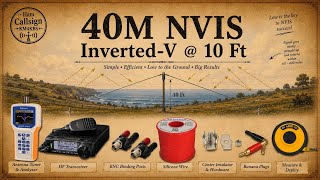
This video offers a comprehensive introduction to Near Vertical Incidence Skywave (NVIS), a specialized radio propagation method used for local and regional communication. Unlike long-distance signals that require a low radiation angle, NVIS utilizes a steep takeoff angle between 75 and 90 degrees to bounce signals off the ionosphere and back down to earth within a 400-mile radius. This technique is particularly effective in mountainous terrain because it allows signals to bypass physical obstacles that would block traditional line-of-sight transmissions. The source explains that successful NVIS operation requires low-mounted horizontal antennas and careful selection of frequencies, typically the 40-meter band during the day and the 80-meter band at night. By minimizing the time radio waves spend in the ionosphere’s absorptive D layer, operators can maintain reliable contact even when standard propagation fails. Additionally, the video highlights the tactical advantages of this method, such as a reduced noise floor and increased difficulty for others to pinpoint the transmitter's exact location.
👉👉 Join The Ham Radio Project Discord: discord.gg/bgpwE5WF9p 👈👈
Coffee and Ham Radios is
------------------------------------------
🦍 TheSmokinApe: youtube.com/c/TheSmokinApe
🔥 KK6USY Ham Radio Adventures: youtube.com/c/KK6USYHamRadioAdventures






20K views

327K views